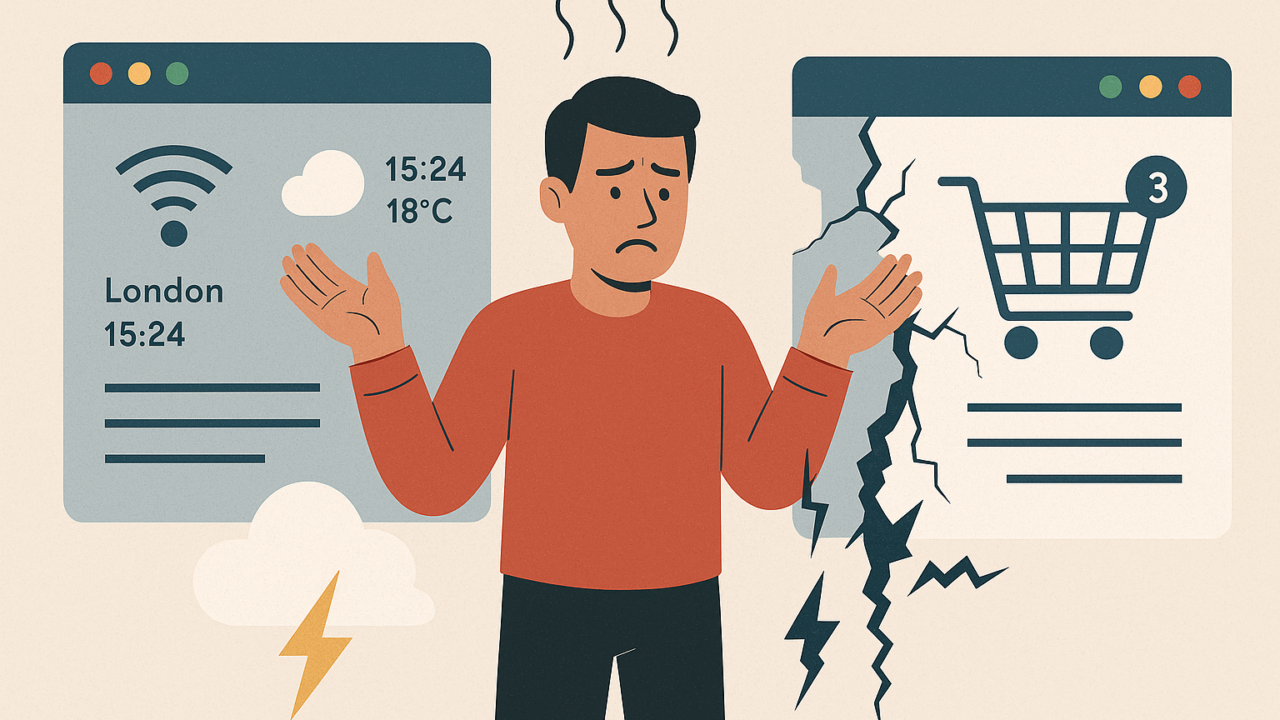

Most people have had the same experience: you open an app you’ve used for years, and something feels off. The interface looks different. A new feature pops up uninvited. A button you relied on has moved—or vanished entirely. You didn’t ask for the change, and you’re not sure you needed it.
Yet across phones, apps, software platforms, and even hardware, tech products keep adding features at a steady pace. Some are useful. Many are ignored. Others actively frustrate users. The question is not whether feature creep exists—it clearly does—but why it happens so consistently, even in products with millions of loyal users.
The answer has less to do with bad intentions and more to do with how modern tech products are built, measured, and marketed.
The Problem: More Features, Less Clarity
In theory, adding features sounds like progress. New tools promise better productivity, more personalization, or enhanced performance. In practice, feature overload often leads to cluttered interfaces, steeper learning curves, and products that feel harder to use over time.
Designers and product managers often talk about “power users,” but most people want tools that do fewer things well. When features pile up, even basic tasks can take longer. What once felt intuitive starts to feel confusing.
Product design commentary from outlets like The Verge has pointed out that many tech products are now optimized for expansion, not simplicity, leaving users to adapt after the fact.
Why Companies Keep Adding Features
Growth Metrics Reward Expansion
One major reason is measurement. Internal success in tech companies is often tracked through metrics like user engagement, time spent in app, and feature adoption. Adding new features creates new data points to measure and justify continued investment.
If a team’s performance is judged by shipping updates, shipping nothing—even when a product works well—can look like stagnation. Over time, this creates pressure to keep adding, even when refinement or subtraction would benefit users more.
Competition Encourages Imitation
Another factor is competition. When one company launches a new capability, rivals often feel compelled to match it quickly. This copycat cycle can result in products bloated with features that exist mainly because competitors have them.
Tech analyst writing for Medium have noted that feature parity has become a defensive strategy, especially in crowded markets like messaging apps, productivity software, and smartphones.
Different Users, Conflicting Needs
Products with large user bases serve many audiences at once. What helps one group can frustrate another. Rather than removing features that only a subset of users wants, companies often keep everything—layering options on top of options.
Over time, products become compromise machines, trying to satisfy everyone and ending up delighting fewer people.
What Feature Creep Breaks
Usability and Focus
As features accumulate, interfaces become harder to navigate. Users spend more time searching for functions than using them. This erodes trust: when people can’t predict how a product will behave, they feel less confident using it.
UX research summarized by the Nielsen Norman Group has long shown that cognitive overload reduces satisfaction and increases errors, especially in frequently used tools.
User Trust
Unrequested changes can make users feel sidelined. When updates remove familiar workflows or prioritize features users didn’t want, it sends a message—intentional or not—that user feedback is secondary to internal goals.
This is why some of the most vocal backlash in tech comes not from broken products, but from products that changed “for no reason.”
The Trade-Off: Innovation Versus Simplicity
Feature growth is not inherently bad. Many innovations began as optional additions before becoming essential. The problem arises when addition becomes the default, and restraint becomes rare.
Simpler products are harder to justify internally. They require saying no to ideas, resisting trends, and accepting that improvement doesn’t always mean expansion. In contrast, adding features feels visible, measurable, and progress-oriented—even when the user experience suffers.
Why Subtraction Is So Rare
Removing features carries real risk. Some users may depend on them, even if they are rarely used overall, and their frustration can be immediate and vocal.
Metrics that teams rely on—such as engagement or feature usage—may dip in the short term, creating the impression that a product is moving backward. Internally, subtraction can feel personal, as it may be seen as undoing months of design, engineering, or strategic work.
As a result, simplification is often postponed or avoided unless a feature becomes actively harmful or too costly to maintain. Yet history shows that some of the most successful redesigns in tech have come from intentional reduction rather than expansion.
Lighter apps, cleaner interfaces, and faster tools often emerge when teams are willing to remove what no longer serves the core experience, even at the cost of short-term discomfort.
A Better Way Forward
The most successful tech products tend to follow a restrained approach to growth. Rather than adding features at every opportunity, they introduce changes slowly, test them carefully, and prioritize clarity over novelty.
Simplicity is treated as a deliberate design choice, not a lack of ambition.
Stronger product teams focus less on what can be added next and more on whether a change solves a real problem, improves understanding, or even makes it possible to remove something unnecessary.
This mindset does not reject innovation; it disciplines it, ensuring that progress enhances usability instead of complicating it.
Progress Isn’t Always Additive
Tech products keep adding features not because users demand them, but because incentives reward visible change. Growth metrics, competitive pressure, and internal momentum all push products toward expansion.
But progress doesn’t always mean more. Sometimes it means clearer workflows, fewer distractions, and tools that respect users’ time and attention.
As digital products become more embedded in daily life, the ability to simplify—to design with restraint—may be one of the most valuable features of all.