
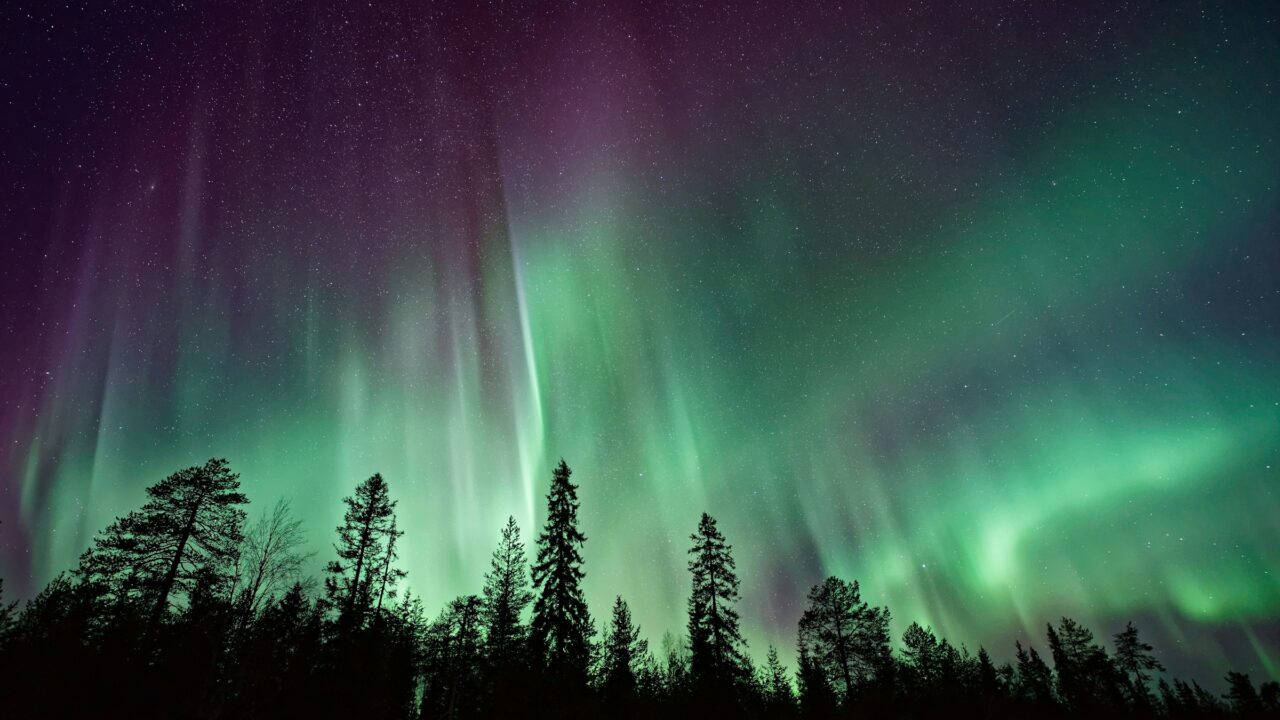
Scientists have identified the electrical process that acts like a natural “space battery” powering Earth’s auroras, offering new insight into how energy moves through near-Earth space to produce the northern lights.
New Findings Explain How Auroras Are Powered
Recent findings from NASA-supported missions have helped researchers understand how electric fields form high above Earth and drive the auroral displays seen near the poles. In a post published by NASA’s Science Mission, scientists explained that these electric fields accelerate electrons into the upper atmosphere, where they collide with gases and create the glowing lights known as auroras.
Researchers describe the process as a “space battery” because it involves the build-up of electric potential that pushes charged particles toward Earth’s atmosphere. When these particles strike oxygen and nitrogen atoms, they produce the green, red, and purple colors visible in the northern and southern lights.
Role of Alfvén Waves Confirmed
NASA said the findings point to a key role played by Alfvén waves—electromagnetic waves that travel along Earth’s magnetic field lines. These waves help generate the electric fields that accelerate electrons downward, completing the chain of events that results in auroral activity.
According to coverage by Interesting Engineering, this mechanism clarifies how energy from space is converted into particle motion that ultimately produces visible auroras. The observations were made using data collected from multiple space missions designed to study Earth’s magnetosphere and upper atmosphere.
Expanding Understanding of Space Weather Processes
The discovery does not change the long-standing explanation that auroras are caused by charged particles colliding with atmospheric gases. Instead, it provides a clearer picture of how the energy that powers those collisions is generated and transferred.
Scientists have known for decades that the Sun’s activity plays a role in auroral displays. What the new research helps clarify is the electrical mechanism that accelerates particles once energy enters Earth’s magnetic environment.
Additional coverage shared via MSN similarly reported that the study focused on identifying the process that drives the electrical energy responsible for auroral arcs, describing it as a key step toward understanding how auroras form.
Ongoing Studies and Future Observations
Researchers say continued analysis of electric fields and wave activity in near-Earth space could improve scientific models of how energy moves through the magnetosphere. NASA noted that studying these processes further will help scientists better understand the complex interactions that lead to auroral events.
The findings mark a step forward in explaining one of Earth’s most recognizable natural phenomena, while also deepening knowledge of the dynamic electrical activity occurring in the planet’s upper atmosphere.